
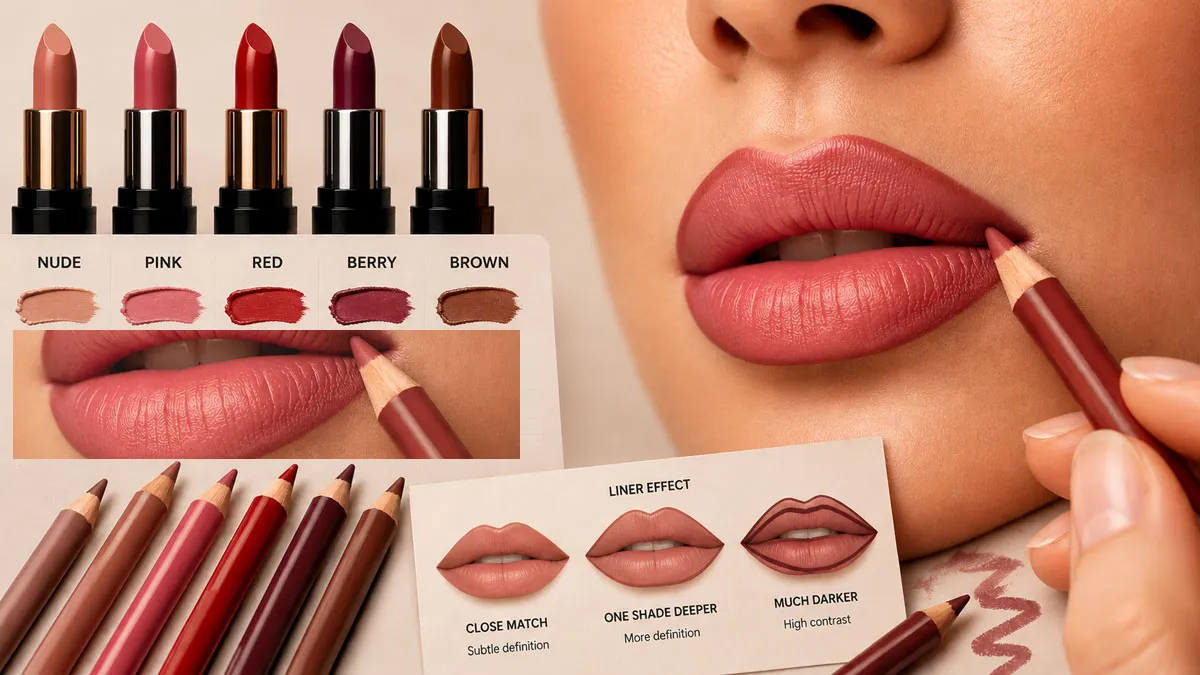
Matching lip liner to lipstick can create a clean, seamless lip, but the two products do not have to be identical. The best choice depends on the effect you want: a matching liner gives a polished, cohesive finish, while a slightly deeper liner can add definition and dimension without changing the overall color dramatically.
The most important factor is not an exact shade match but color family, undertone, and depth. A liner that is close to your lipstick or natural lip tone is generally easier to blend, while a liner that is noticeably darker can be used deliberately for contouring or a more defined lip. The finish of the two products can also influence how harmonious the result looks.
When Should Lip Liner Match Your Lipstick?
A closely matching liner is the simplest option when you want the lipstick to look even and uninterrupted. This approach works particularly well with strong colors such as red, berry, or classic pink because the liner helps define the edges without introducing a visibly different color.
Matching does not necessarily mean buying the exact shade from the same product range. A liner can be slightly lighter, darker, or more muted while still looking coordinated. What matters is that the undertones work together. For example, a warm coral lipstick generally pairs more naturally with a warm-toned liner than with a cool mauve liner.
| Desired Effect | Lip Liner Choice | Likely Result |
|---|---|---|
| Seamless everyday lip | Close match to lipstick | Clean and cohesive |
| Natural definition | Similar to your natural lip tone | Softly defined edges |
| Subtle contour | One to two shades deeper | More dimension and definition |
| Bold contrast | Noticeably deeper shade in the same color family | Defined or gradient effect |
Can Lip Liner Be Darker Than Lipstick?
Yes. A darker liner can be especially useful when you want more structure around the lips or a softly contoured appearance. The key is to keep the colors compatible rather than choosing a darker shade at random. A brown or rose liner can work with a nude lipstick, for example, while a deeper red liner can complement a red lipstick.
For a subtle effect, choose a liner only modestly deeper than the lipstick or your natural lip color. A very dark outline creates stronger contrast and can become the most noticeable part of the makeup rather than simply defining the lips.
- Choose a similar undertone when you want the combination to look seamless.
- Use a slightly deeper liner when you want more definition.
- Blend the inner edge of the liner into the lipstick to avoid a harsh border.
- Keep the liner close to your natural lip shape unless you intentionally want an overlined effect.
- Consider the finish as well as the color when creating a cohesive combination.
Should Nude Lip Liner Match Nude Lipstick?
Nude combinations are more flexible than many people expect. Instead of matching the lipstick exactly, a nude liner that resembles your natural lip tone can provide a useful base for several lipstick shades. This is particularly helpful when your lipstick is very light or slightly sheer, because the liner can add definition without overpowering the color.
If the nude lipstick has pink, peach, brown, or mauve undertones, choosing a liner within the same general family usually produces a more balanced result. A liner that is a little deeper can also create subtle dimension. The closer the liner is to your natural lip color, the softer the overall effect tends to be.
What If You Do Not Have A Matching Lip Liner?
You do not need a perfectly matched pencil for every lipstick. A neutral liner that complements your natural lip color can work with many shades, provided it does not create an unwanted contrast. For a bolder look, a deeper liner from the same color family can be blended into the lipstick to create a gradient rather than a visible line.
Application also matters. Outline the lips with short, controlled strokes, then soften the inner edge before applying lipstick. You can also fill in the lips partially or completely with liner when you want additional definition and a more integrated color transition.
Does Lip Liner Have To Match The Lipstick Finish?
Not necessarily. Similar finishes generally create the most uniform appearance, so a matte liner with a matte lipstick is an easy combination. However, mixing finishes can be intentional. A defined liner underneath a glossy lipstick, for example, can create contrast while keeping the edges structured.
For a particularly seamless result, consider three elements together: shade, undertone, and finish. If one element differs, keeping the other two compatible can prevent the combination from looking disconnected.
How To Choose The Right Lip Liner
When deciding between an exact match and a contrasting liner, start with the look you want rather than the name of the lipstick shade. A matching liner is the safest choice for precision and consistency, while a slightly deeper liner gives you more opportunity to shape and contour the lips.
Ultimately, there is no requirement for lip liner and lipstick to be identical. The most versatile rule is to keep them harmonious rather than perfectly matched. Choose similar undertones for a natural finish, go slightly deeper for definition, and blend the two colors whenever you want the transition to appear softer. …