
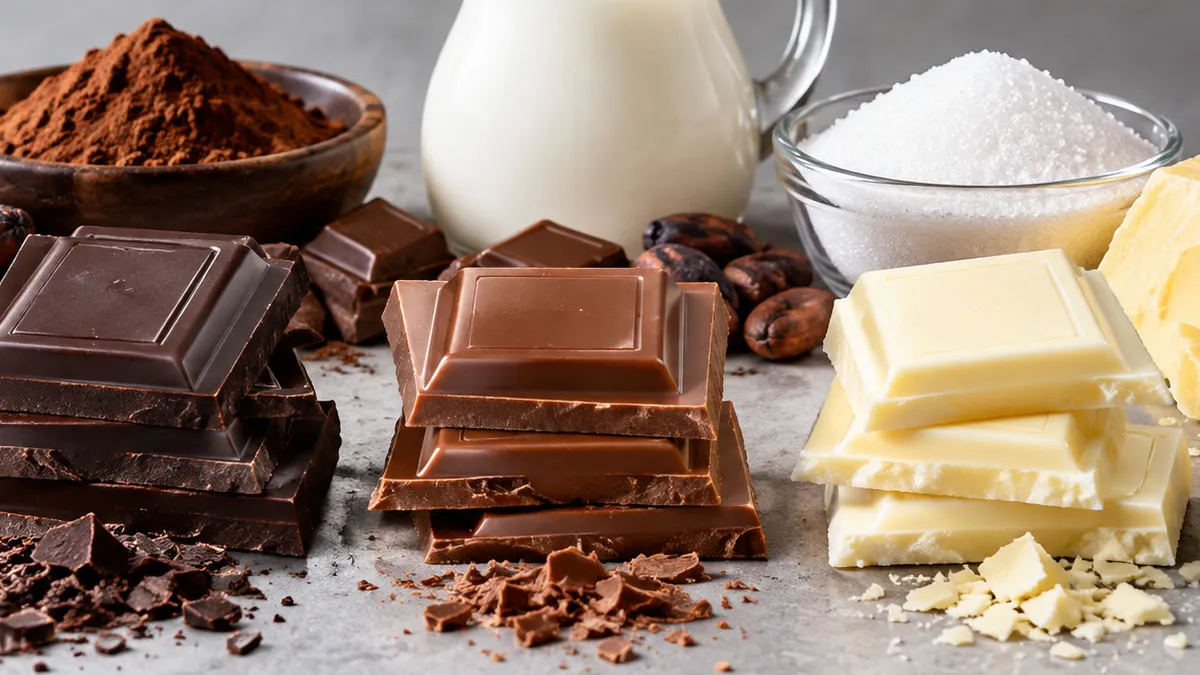
Choosing between dark, milk, and white chocolate is mainly a matter of understanding what each type contains and how those ingredients affect flavor, color, and texture. Dark chocolate generally emphasizes cocoa, milk chocolate combines cocoa with milk ingredients and more sweetness, while white chocolate is made with cocoa butter but does not contain cocoa solids.
The differences are not simply about how sweet each chocolate tastes. The proportions of cocoa components, sugar, and dairy ingredients can change the chocolate’s bitterness, creaminess, aroma, melting behavior, and even whether it is suitable for someone avoiding milk. Product formulations vary, so the ingredient list remains important when a specific dietary requirement matters.
How Dark, Milk, and White Chocolate Differ
| Type | Main Character | Typical Flavor | Color |
|---|---|---|---|
| Dark chocolate | Higher emphasis on cocoa components | Rich, intense, bitter to bittersweet | Brown to very dark brown |
| Milk chocolate | Cocoa combined with milk ingredients | Sweeter, creamy, milder | Light to medium brown |
| White chocolate | Cocoa butter, milk ingredients, and sweeteners; no cocoa solids | Sweet, creamy, buttery | Cream to ivory |
Dark Chocolate
Dark chocolate is made with cocoa-derived ingredients and sugar, with formulations differing considerably in their proportions. Because it contains more of the cocoa components responsible for chocolate flavor and less dairy than milk chocolate, it commonly has a more pronounced cocoa taste.
The word “dark” does not guarantee a particular cocoa percentage. A bar labeled with a higher cocoa percentage will generally contain less room for sugar and other ingredients, but cocoa percentage alone does not completely determine flavor. Roasting, cocoa origin, processing, sugar level, and the particular recipe all contribute to the final taste.
Dark chocolate also should not automatically be considered dairy-free. Milk is a permitted ingredient in some dark chocolate products, and cross-contact during manufacturing can introduce milk into products that do not intentionally use it. People with milk allergies should therefore check the complete label rather than relying only on the words “dark chocolate.”
Milk Chocolate
Milk chocolate adds dairy ingredients to the cocoa and sugar base. The milk contributes a softer, creamier character and helps produce the lighter brown color associated with this style of chocolate.
Compared with a strongly cocoa-forward dark chocolate, milk chocolate is usually perceived as sweeter and less bitter. That makes it particularly common in candy bars, filled chocolates, coatings, and other confectionery products where a smooth and approachable chocolate flavor is desired.
The exact balance still varies from product to product. Two milk chocolates can taste quite different depending on their cocoa ingredients, milk components, sugar content, vanilla or other flavorings, and manufacturing process.
White Chocolate
White chocolate is different from the other two because it contains cocoa butter but not cocoa solids. Cocoa butter is the fat naturally obtained from cocoa beans, while cocoa solids provide much of the characteristic dark color and deeper cocoa flavor associated with conventional chocolate.
In the United States, the FDA standard for white chocolate specifies at least 20% cocoa butter, at least 14% total milk solids, at least 3.5% milkfat, and a maximum of 55% nutritive carbohydrate sweeteners. The standard also permits certain additional ingredients.
Because it lacks cocoa solids, white chocolate has a creamy, sweet, and buttery profile rather than the roasted, bitter cocoa character associated with dark chocolate. Its pale color comes from the absence of cocoa solids rather than from using a different type of cocoa bean.
Why Do They Taste So Different?
The biggest differences come from the balance of cocoa components, dairy ingredients, and sweeteners. Cocoa solids contribute much of the familiar cocoa aroma, color, and bitterness. Milk ingredients can soften that intensity and add creaminess, while sugar increases sweetness and changes how the other flavors are perceived.
- Dark chocolate: cocoa plays the leading role, producing a more intense and often bitter flavor.
- Milk chocolate: milk ingredients soften the cocoa character and add creaminess.
- White chocolate: cocoa butter supplies the cocoa-derived fat, while milk and sweeteners create its characteristic creamy sweetness.
Which One Should You Choose?
The most suitable type depends on what you want from the chocolate. For a stronger cocoa character, dark chocolate is the natural choice. Milk chocolate works well when you prefer a softer, sweeter, creamier flavor. White chocolate is appropriate when you want the texture and richness of cocoa butter without the flavor of cocoa solids.
For baking, the choice also depends on the recipe. Dark chocolate can provide a pronounced cocoa base, milk chocolate can make a dessert sweeter and creamier, and white chocolate can contribute sweetness and cocoa-butter richness without adding the dark color associated with cocoa solids.
If avoiding dairy or milk allergens is important, do not assume that dark chocolate is automatically safe. FDA testing has found milk in some dark chocolate products, including products carrying dairy-free or similar claims, which illustrates why ingredient and allergen labeling matters.
The Simple Distinction
The easiest way to remember the difference is to focus on what happens to the cocoa components. Dark chocolate keeps cocoa at the center, milk chocolate balances cocoa with dairy and sweetness, and white chocolate uses cocoa butter without cocoa solids. Those differences in composition explain most of the variation in color, flavor, texture, and culinary use across the three types. …