
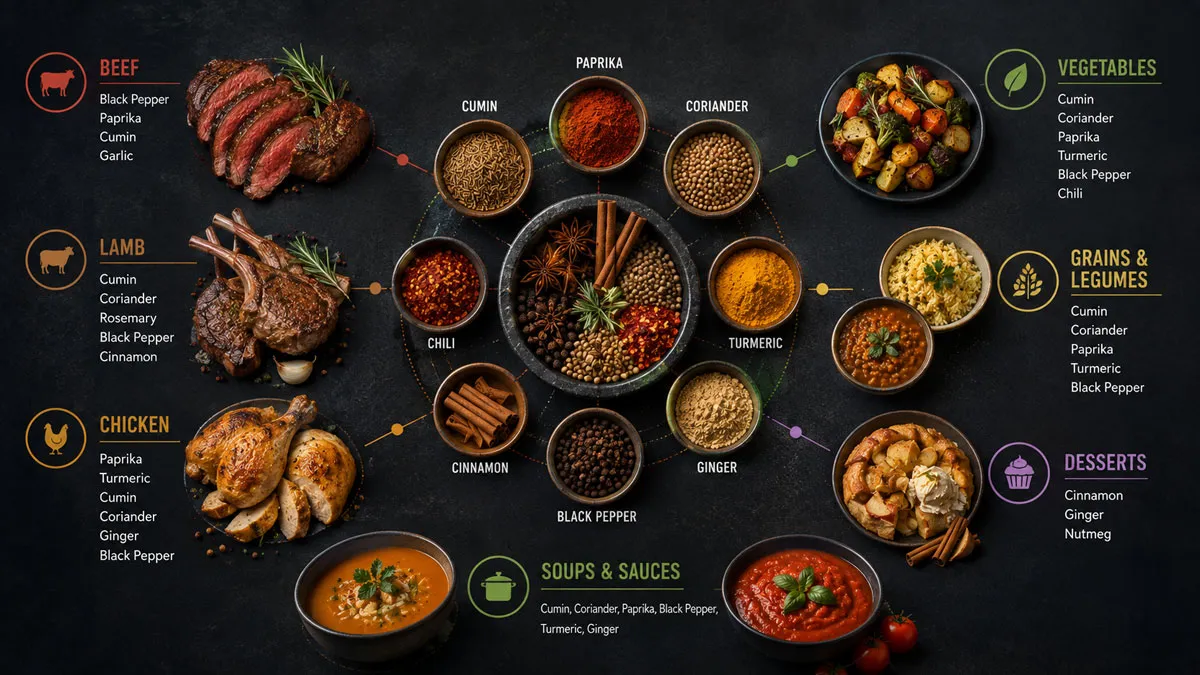
Choosing the right spice can change a dish from flat and ordinary to balanced and aromatic. The key is not simply knowing which spices are popular, but understanding what each one contributes: warmth, earthiness, sweetness, smokiness, heat, citrus-like freshness, or depth. Once those flavor roles become familiar, matching spices to meat, vegetables, grains, soups, sauces, and desserts becomes much easier.
A useful distinction is between a spice that forms the foundation of a dish and one that provides a finishing accent. Cumin, coriander, and turmeric, for example, often work as part of a broader savory seasoning, while paprika can contribute both color and mild sweetness. Cardamom and cinnamon can move comfortably between savory dishes and desserts. The best pairing also depends on the quantity used and how the spice is cooked, so there is rarely a single correct combination.
How To Match Spices With Different Types Of Dishes
Think about the main ingredient first, then consider the flavor you want to add. Rich foods generally benefit from aromatic or warming spices, while delicate ingredients often need lighter seasoning. Vegetables and grains can accept stronger combinations because spices give them much of their character.
- Beef and lamb: cumin, black pepper, coriander, paprika, rosemary, and nutmeg can add warmth and depth.
- Chicken: paprika, turmeric, cumin, coriander, ginger, and black pepper work well with different styles of preparation.
- Fish and seafood: coriander, black pepper, paprika, ginger, turmeric, and mild chili can complement rather than overwhelm delicate flavors.
- Beans and lentils: cumin, coriander, turmeric, paprika, and black pepper provide savory depth.
- Potatoes and root vegetables: paprika, cumin, turmeric, rosemary, thyme, and nutmeg offer several contrasting directions.
- Rice and grain dishes: cardamom, cumin, coriander, turmeric, cinnamon, and saffron can create aromatic profiles ranging from savory to subtly sweet.
- Desserts: cinnamon, cardamom, nutmeg, cloves, and ginger are especially useful with fruit, baked goods, custards, and creamy desserts.
Common Spice And Dish Pairings
The following combinations are reliable starting points rather than rigid rules. Regional cuisines often use the same spice in very different ways, and personal preference can change the ideal balance.
| Spice | Flavor Profile | Dishes It Commonly Suits |
|---|---|---|
| Cumin | Earthy, warm, roasted | Curries, stews, lamb, chicken, beans, potatoes, chili |
| Coriander | Fresh, citrus-like, gently sweet | Curries, seafood, vegetables, rice, soups, tacos |
| Turmeric | Earthy, slightly bitter, aromatic | Curries, rice, soups, lentils, vegetables, coconut-based dishes |
| Paprika | Mildly sweet, earthy, sometimes smoky | Chicken, potatoes, eggs, pork, stews, sauces |
| Cardamom | Floral, aromatic, warm | Biryani, curries, coffee, tea, rice pudding, baked goods |
| Cinnamon | Warm, sweet, woody | Desserts, fruit, rice dishes, stews, braised meats |
| Nutmeg | Warm, nutty, aromatic | Cream sauces, potatoes, vegetables, baked goods, custards |
| Black Pepper | Pungent, woody, sharp | Almost all savory foods, especially meat, vegetables, soups, and sauces |
Which Spices Work Best With Meat?
Beef And Lamb
Cumin is particularly useful when meat needs a deeper, roasted character. It is widely used with lamb, stews, sausages, and grilled or marinated meats. Coriander can soften the intensity of cumin with a fresher, more citrus-like note. Paprika adds color and a mild sweetness, while black pepper provides sharper heat.
For a warmer profile, cumin and coriander can be combined with black pepper and a small amount of cinnamon or nutmeg. The latter spices should be used carefully because their aromatic character can quickly become dominant.
Chicken And Pork
Chicken works with a broad range of seasonings because its flavor is relatively mild. Paprika is useful when you want color and gentle sweetness, while turmeric brings an earthy character and a golden hue. Cumin and coriander create a more aromatic profile, particularly in grilled, roasted, or stewed preparations.
Pork pairs naturally with warm spices as well as herbs. Paprika, black pepper, thyme, and rosemary can create a savory seasoning, while small amounts of nutmeg or cinnamon can be appropriate in richer preparations.
Which Spices Work Best With Vegetables And Grains?
Spices are especially valuable with vegetables, beans, and grains because they can add complexity without requiring a heavy sauce. Cumin works particularly well with potatoes, chickpeas, lentils, and other legumes. Coriander provides a lighter aromatic quality and is useful with vegetables, rice, soups, and seafood.
Turmeric is commonly used in rice dishes and curry-style preparations. It works particularly well alongside black pepper, ginger, cinnamon, or coconut milk. Paprika is a practical choice for potatoes and roasted vegetables because it contributes both flavor and color.
For rice dishes, the choice depends on the desired character. Cumin can create a savory, earthy foundation; cardamom adds fragrance; turmeric provides color and earthy flavor; and cinnamon gives a warmer, sweeter note. Using several of these together is common in aromatic rice preparations.
How To Use Warm Spices In Sweet Dishes
Not all spices belong exclusively in savory cooking. Cardamom, cinnamon, nutmeg, cloves, and ginger are particularly versatile in desserts and drinks. Cardamom can provide a floral aroma in rice pudding, baked goods, tea, and coffee. Cinnamon complements apples, pears, chocolate, and many baked dishes. Nutmeg works especially well with creamy preparations such as custards and some sauces.
The amount matters more in sweet dishes than many cooks expect. A small quantity can add complexity without making the dessert taste overtly spiced. Too much, however, can mask delicate flavors such as vanilla, fruit, or dairy.
When Should You Add A Spice?
Timing affects flavor almost as much as the choice of spice. Whole cumin seeds, for example, are often toasted or cooked early so their aroma can develop. Ground spices can behave differently because their greater surface area allows them to release flavor quickly.
Paprika deserves particular care. It provides flavor and vivid color, but prolonged high heat can diminish both and may cause it to burn. Adding it later or cooking it briefly over moderate heat can help preserve its character.
| Cooking Stage | Useful Spice Approach | Typical Result |
|---|---|---|
| Early cooking | Whole cumin, whole cardamom, whole spices | Deep, developed aroma |
| Middle of cooking | Ground cumin, coriander, turmeric | Integrated flavor throughout the dish |
| Later cooking | Paprika and delicate ground spices | More noticeable aroma and better color retention |
| Finishing | Fresh herbs, freshly ground pepper, selected aromatic spices | Brighter, more immediate flavor |
How To Build A Balanced Spice Combination
Instead of adding many spices at random, start with one dominant flavor and add one or two supporting notes. For example, cumin can provide an earthy base, coriander can add freshness, and paprika can contribute sweetness and color. Turmeric can establish an earthy background, while ginger and black pepper provide contrast.
A simple rule is to avoid giving every spice equal importance. A dish with cumin, coriander, turmeric, paprika, cinnamon, cardamom, cloves, and nutmeg can easily become muddled if each is used heavily. A smaller combination with clearly defined roles usually produces a cleaner result.
- Choose one main spice that matches the dominant ingredient.
- Add a complementary spice with a contrasting or supporting flavor.
- Use strong spices such as cloves, nutmeg, and cardamom sparingly.
- Taste during cooking rather than adding a large amount at once.
- Consider cooking time because some spices develop gradually while others are more noticeable when added later.
The easiest way to improve spice pairing is to think in terms of flavor rather than memorized recipes. Earthy cumin suits hearty foods, bright coriander can lift vegetables and seafood, turmeric adds earthy depth and color, paprika brings mild sweetness or smokiness, and aromatic spices such as cardamom and cinnamon create warmth in both savory and sweet dishes. With those basic roles in mind, you can adapt seasoning to the ingredient, cooking method, and flavor profile you actually want. …